HUMO Stablecoin in Uzbekistan: How the Pilot Works and Where It Is Accepted
The Central Bank and NAPP have launched a pilot for the HUMO stable token: 1 HUMO = 1 soum, backed by government bonds, with more than 20 merchants ready to accept it. We break down who the issuer is, how the token is issued and redeemed, and why this is not a 'green light to pay with cryptocurrency'.
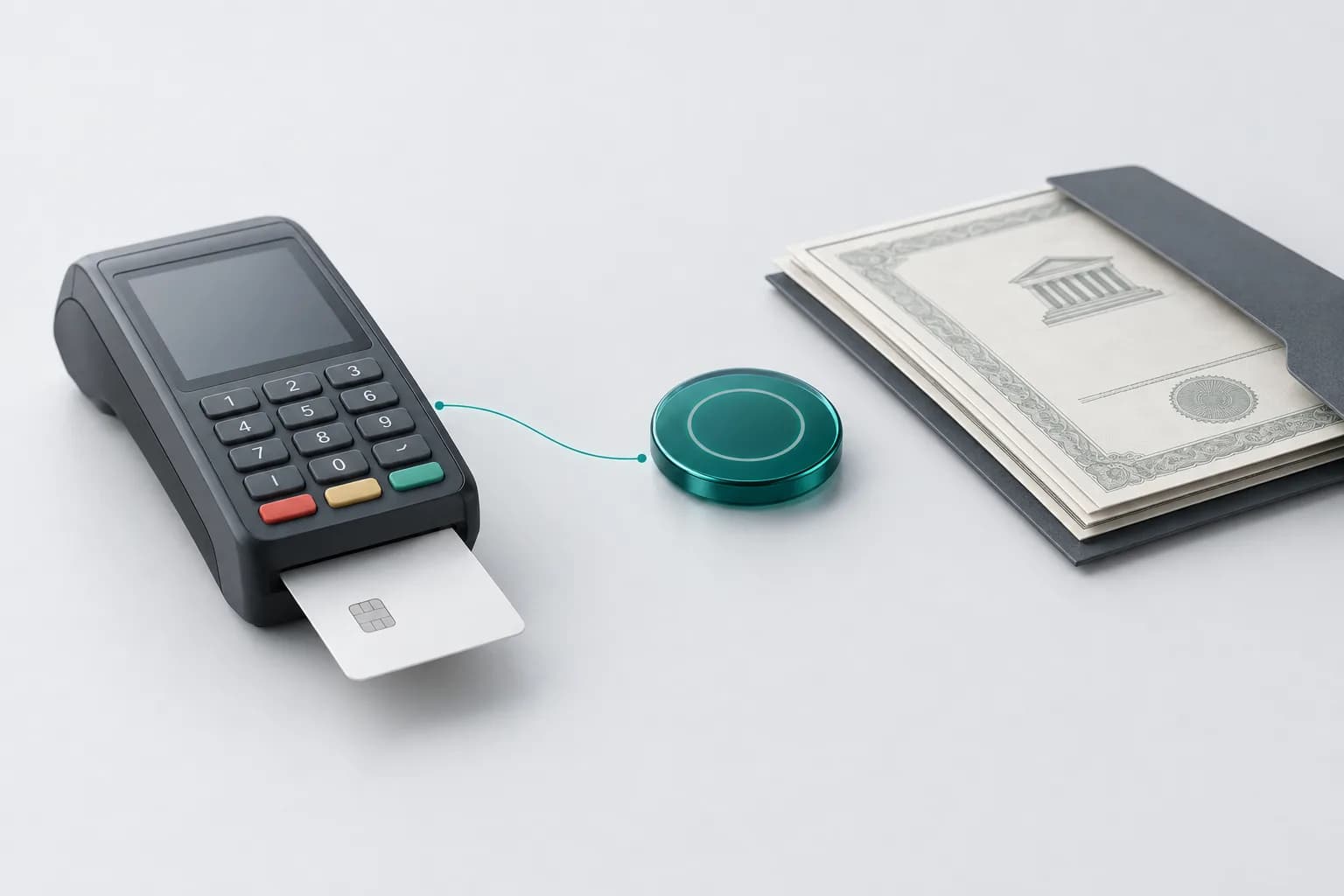
In brief: HUMO is a stable token (stablecoin) with a hard 1 HUMO = 1 soum peg, issued by HUMO DIGITAL LLC and backed by Uzbek government bonds. The Central Bank announced the launch of the pilot in a press release on 7 September 2026, and Uzbek media picked up the news on 8 September. The project runs under a special legal regime (a "regulatory sandbox") operated by the Central Bank and the National Agency of Perspective Projects (NAPP): the initial term is 12 months, with an overall cap of three years. According to Spot.uz on 7 September 2026, more than 20 merchant entrepreneurs are ready to test payments with the token. This is an experiment within a limited perimeter, not a general permission to pay with cryptocurrency: the soum remains the country's only legal tender.
Key parameters of the HUMO pilot
| Parameter | Value | Source |
|---|---|---|
| Issuer | HUMO DIGITAL LLC, registered by NAPP as a participant in the special regime | Central Bank press release, 7 September 2026 |
| Infrastructure partner | Asterium JSC — crypto depository, crypto exchange, crypto store | Central Bank press release, 7 September 2026 |
| Rate | 1 HUMO = 1 soum | Central Bank press release, 7 September 2026 |
| Backing | Uzbek government bonds held in a securities account at the Central Depository | HUMO white paper, version 1.0 of 22 July 2026 |
| Network | Mirasmanda — an EVM-compatible distributed ledger network developed by Asterium | HUMO white paper, 22 July 2026 |
| Merchants | more than 20 entrepreneurs | Spot.uz, 7 September 2026 |
| Term | 12 months, extendable to no more than 3 years | Central Bank press release, 7 September 2026 |
| Legal basis | PQ-359 of 27 November 2025; the special regime regulation, registered with the Ministry of Justice on 15 April 2026 under No. 3818 | lex.uz; Central Bank press release |
For reference: the official Central Bank rate on 17 September 2026 was 11,797.46 soums per US dollar, meaning 100,000 HUMO is about $8.5.
What backs the HUMO token: government bonds instead of currency in an account
Initially, the special regime regulation allowed only one form of backing for stable tokens — money in national or foreign currency held in dedicated accounts at the Central Bank. On 22 July 2026 the document was amended: government securities blocked at the Central Depository may also serve as backing. As Spot.uz wrote on 23 July 2026, the balance in the dedicated account together with the face value of the blocked government bonds may not be less than the total face value of the tokens in circulation, while the right to income on those securities remains with the issuer. Loans, pledged assets and other borrowed funds cannot serve as backing.
The practical consequence for a holder: the token's value is tied not to the market price of any crypto asset, but to the state's obligations, and the volume of issuance cannot exceed the volume of backing. This sets HUMO apart from the familiar dollar stablecoins such as USDT — a general breakdown of their mechanics and risks is available in our article "What Is a Stablecoin in Plain English".
How HUMO is issued and redeemed
According to the project's white paper (version 1.0 of 22 July 2026), the scheme works as follows:
- The issuer — HUMO DIGITAL LLC — first assembles the backing: government bonds are recorded in a securities account at the Central Depository and blocked.
- The issuer files documents with the crypto depository (Asterium JSC), which verifies the backing and records the issuance in its register.
- Tokens are issued on the Mirasmanda network through a smart contract and enter circulation.
- A holder may present the token for redemption at the face value of 1 HUMO = 1 soum; payment comes from funds in the reserve accounts or from the sale of bonds, and redeemed tokens are burned.
Under the document, fees are charged for issuance, redemption, transfers and payment services, are set by contract and do not affect the token's face value. Customer identification (KYC) is mandatory for both individuals and legal entities, and the framework provides for anti-money-laundering checks and transaction monitoring using blockchain analytics. Asterium's token page states that HUMO can be bought and redeemed through the Asterium wallet, partner banks and authorized providers, and that the adequacy of the backing is verified by internal and external auditors.
Where you can pay with the HUMO token
The pilot is testing precisely the payment scenario: paying for goods, works and services inside Uzbekistan and businesses accepting such payments, as well as the integration of banking, processing and blockchain infrastructure. Spot.uz on 7 September 2026 and Cointelegraph on 8 September 2026 report more than 20 merchants ready to accept HUMO.
Neither the Central Bank, nor NAPP, nor the issuer had published a named list of retail outlets as of 17 September 2026 — for now there is no way to find out in advance which store will accept the token. The pilot does not provide for a mass retail launch in a "pay with the token everywhere" format: the circle of participants is limited to those registered under the special regime.
Legal status: this is not the legalization of crypto payments
Some publications called HUMO an "official means of payment" and a "state token." Both descriptions are wrong.
- The soum is the only legal tender in Uzbekistan. PQ-3832 of 3 July 2018 (as currently in force) establishes that crypto assets are not a means of payment, "except in cases established by legislative acts." Special regime pilots are exactly such an exception, but a narrow and temporary one.
- The issuer is not the state. HUMO DIGITAL LLC is a company registered by NAPP as a participant in the special regime. Only the bonds that serve as backing are state-issued.
- The option to test stable tokens as a means of payment came from Presidential Resolution PQ-359 of 27 November 2025 (in force since 28 November 2025): from 1 January 2026 it introduced the special regime for stable tokens and allowed the issuance of tokenized shares and bonds on licensed platforms. The procedure was approved by a joint act of the Central Bank and NAPP, registered with the Ministry of Justice on 15 April 2026 under No. 3818.
HUMO and the digital soum should also be kept apart. HUMO is a private token in a sandbox. A central bank digital currency (CBDC) is a different project: the Central Bank is studying a wholesale CBDC and in parallel testing private stable tokens together with NAPP, but it has announced no decision to issue a digital soum.
Outside the pilot's perimeter the rules have not changed: since 1 January 2023, crypto assets in Uzbekistan may be bought, sold and exchanged only through licensed national providers (PQ-3832). The NAPP register lists two operating crypto exchanges — COINPAY and ASTERIUM; transactions outside licensed platforms fall under Article 155-4 of the Code of Administrative Liability.
Project timeline
| Date | Event |
|---|---|
| 13–14 May 2025 | The Humo payment system announces a token backed by government bonds; the partners are Asterium (infrastructure) and Broxus (the Tycho blockchain protocol), with support for EVM and TVM environments. Humo management board chairman Aleksey Maksimov said on 13 May 2025 that the token should increase trust in the financial system, simplify transactions and reduce fraud risks (uz.kursiv.media) |
| 10 July 2025 | The token is entered in NAPP's unified electronic register of crypto assets, with the backing held by the crypto depository Asterium. Asterium director Komilkhuja Sultonov called the project a step toward a transparent and resilient financial environment on 10 July 2025 (humocard.uz). The Humo card network exceeds 35 million |
| 1 January 2026 | The parameters of the special regime for stable tokens under PQ-359 take effect |
| 15–16 April 2026 | The special regime regulation (No. 3818) is registered with the Ministry of Justice and takes effect |
| 22 July 2026 | Amendments to the regulation: government bonds admitted as backing. The HUMO white paper version 1.0 carries the same date |
| 7–8 September 2026 | The Central Bank and NAPP announce the start of the HUMO pilot: 20+ merchants, a 12-month term |
Risks and open questions
The Central Bank's press release spells out exactly what the regulator will monitor during the pilot: alignment with monetary policy objectives, financial and price stability, the adequacy of the token's backing, transparency of transactions, management of financial and operational risks, cybersecurity, consumer protection and anti-money-laundering requirements. That list is also the list of the experiment's weak points.
To it can be added questions that have no public answers yet: the size of fees for issuance, redemption and transfers (the white paper leaves them to contracts), transaction limits for individuals, actual redemption settlement times, the composition of the participating merchants, and what a customer should do if the pilot is halted early. Under the terms of the regime, the experiment is limited to 12 months with a possible extension to a maximum of three years — as of today HUMO is not an open-ended payment instrument.
The argument over whether stablecoins are suitable for mass settlements is also playing out at the global level — we examined it in "Stablecoins in Settlement: 21 Banks vs the BIS Stance".
Sources
- Central Bank of the Republic of Uzbekistan, press release on the HUMO stable token pilot project, 7 September 2026 — https://cbu.uz/ru/press_center/releases/4481354/
- Spot.uz, "Uzbekistan begins testing stablecoins for payments for goods and services," 7 September 2026 — https://www.spot.uz/ru/2026/09/07/stablecoin-humo
- Yuz.uz, on the launch of the pilot project for using the HUMO stable token, 8 September 2026 — https://yuz.uz/ru/news/v-uzbekistane-zapuskaetsya-pilotny-proekt-po-ispolzovaniyu-stabilnogo-tokena-humo-v-kachestve-sredstva-plateja
- White paper of the HUMO stable token, version 1.0 of 22 July 2026 — https://humo-token.uz/ru/whitepaper/
- Asterium, HUMO token page — https://asterium.com/uz/humo-token
- Spot.uz (Uzbek edition), on amendments to the stable token regulation, 23 July 2026 — https://www.spot.uz/oz/2026/07/23/stablecoins
- PQ-359 "On measures for the further development of the financial technology sector in the Republic of Uzbekistan," 27 November 2025 — https://lex.uz/ru/docs/7864260
- PQ-3832 "On measures for the development of the digital economy and the crypto asset market," 3 July 2018, as currently in force — https://lex.uz/docs/3806048
- Humocard.uz, "A token backed by government bonds has been issued in Uzbekistan," 10 July 2025 — https://humocard.uz/ru/press_center/news/v-uzbekistane-vypustili-token-obespechennyy-gosudarstvennymi-obligatsiyami/
- Kursiv Uzbekistan, "The Humo token is being tested in Uzbekistan," 13 May 2025 — https://uz.kursiv.media/2025-05-13/token-humo-testiruyut-v-uzbekistane/
- Gazeta.uz (Uzbek edition), on the Humo payment system issuing a token backed by government bonds, 14 May 2025 — https://www.gazeta.uz/oz/2025/05/14/humo-token/
- Cointelegraph, "Uzbekistan tests som-pegged stablecoin for payments," 8 September 2026 — https://cointelegraph.com/news/uzbekistan-humo-stablecoin-payment-pilot
- NAPP register of licensed crypto asset service providers — https://napp.uz/ru/pages/erlsp
- Official Central Bank of Uzbekistan exchange rates for 17 September 2026 — https://cbu.uz/ru/arkhiv-kursov-valyut/json/