Crypto Mining Permit in Uzbekistan in 2026: NAPP Permit or Besqala Residency
Only a legal entity can mine legally in Uzbekistan: with a NAPP permit or as a resident of the Besqala Mining Valley zone in Karakalpakstan. We compare the two routes — documents, timelines, fees, tariffs and fines — based on the acts on lex.uz and the NAPP register as of 24 September 2026.
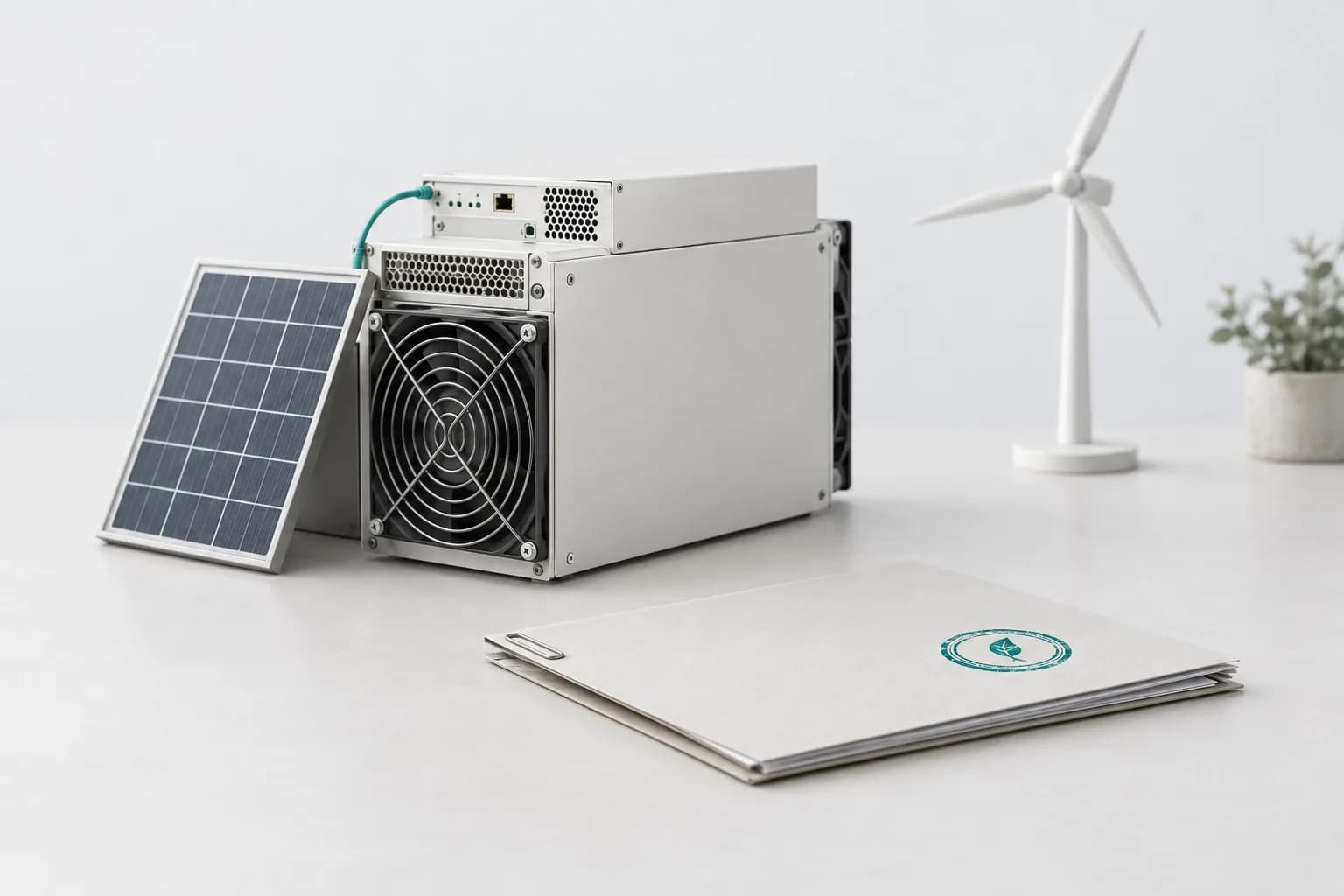
In brief: in Uzbekistan in 2026, mining is permitted only to legal entities, and there are two legal routes: a permit from the National Agency of Perspective Projects (NAPP) under Regulation No. 3461, or resident status in the Besqala Mining Valley zone in Karakalpakstan under PQ-143 and Regulation No. 3893, where the NAPP permit is issued together with a certificate from the zone's Directorate. The NAPP mining permit register (ERMAP) contains one entry as of 24 September 2026: NEXAGRID LLC, permit M # 001 of 19 January 2026, Romitan district, Bukhara region. Mining without a permit falls under Article 155-5 of the Code of Administrative Liability, and a repeat offense under Article 278-9 of the Criminal Code.
NAPP permit vs Besqala residency: a comparison
Acts: PQ-3832 of 3 July 2018, as amended by PQ-143 from 20 April 2026; Regulation reg. No. 3461 of 29 September 2023 (NAPP order No. 68), in force since 3 October 2023; PQ-143 of 17 April 2026, in force since 20 April 2026; Regulation reg. No. 3893 of 8 July 2026 (NAPP order No. 22 of 22 June 2026), in force since 9 July 2026.
| NAPP permit | Besqala resident | |
|---|---|---|
| Who | a legal entity; site outside Karakalpakstan (not allowed in the zone without resident status, para. 64 of Regulation No. 3893) | a legal entity registered in Karakalpakstan |
| Document | a permit for 5 years | a permit + a resident certificate, 5 years each |
| Review | 20 days, free of charge | up to 30 days, free of charge |
| Monthly fee | 10 BCV = 4.4 million soums | 0 until 1 January 2035, but 1% of income to the Directorate |
| Taxes | crypto asset transactions are not taxed until 1 January 2029 (PQ-3832, para. 2) | mining income is exempt until 1 January 2035 |
| Energy | a solar PV plant; the grid — in cases provided for by law | all renewable sources, hydrogen, the unified grid, generation at unprofitable and depleting fields |
| Grid | group II tariff ×2, surcharges at peak hours | group II tariff ×2 |
| Selling mined assets | Uzbek exchanges under para. 10 of Regulation No. 3461; para. 4(c) of PQ-3832 (as amended by PQ-143) — also foreign platforms, with proceeds to Uzbek banks | national exchanges or foreign platforms, with proceeds to Uzbek banks |
| Reporting | information on transactions at NAPP's request | records of sales and exchanges, information to NAPP and the Directorate |
The fee is set by Regulation No. 3388 (as amended by No. 3388-2 of 27 July 2026) and paid in advance by the 10th of the month at the BCV in force on the payment date; the BCV has been 440,000 soums since 1 September 2026 (PF-115 of 23 June 2026). The exemption for zone residents is written into para. 1 of Regulation No. 3388.
A caveat on sales. PQ-143 restated para. 4 of PQ-3832: miners are allowed to sell what they mine "through national crypto exchanges or foreign platforms, including under direct contracts," with the proceeds mandatorily credited to banks in Uzbekistan. Para. 10 of Regulation No. 3461 on lex.uz (checked on 24 September 2026) still names licensed Uzbek exchanges; the editorial team found no NAPP clarifications for miners outside the zone. For residents, paras. 68–71 of Regulation No. 3893 expressly allow sales abroad, provided the platform's license is verified.
How to get a mining permit from NAPP
- The requirements of para. 12 of Regulation No. 3461, including: a solar PV plant (except in cases provided for by law), separate premises, a working power supply, the declared address only, a meter with an automated metering system (ASKUE) when connected to the grid, no covert mining and no anonymous assets, information at NAPP's request, and payment of fees.
- An application to the "Registration" system via OneID (para. 13): TIN, name, contact details, the address of the premises, bank and account, the purpose of the application, details of the solar PV plant or an energy supply contract, equipment details with a proof-of-ownership document (a cargo customs declaration or other), a list of the crypto assets to be mined and wallet addresses.
- Review: the commission takes 15 days and the NAPP decision 5 days, 20 days in total from a complete set of documents (paras. 16–18); up to 30 working days are given to fix remediable deficiencies.
- A refusal is possible only on the four grounds of para. 22: an incomplete set of documents, non-compliance with para. 12, false information, and information on the involvement or suspected involvement of officers and founders in crimes from the list in para. 22 (including economic and corruption crimes and money laundering). A refusal "on grounds of inexpediency" is not allowed.
- The permit is issued within one day, electronically, with a QR code, and is published on napp.uz; no fee is charged for review and issuance. A renewal must be requested no later than one month before expiry.
How to become a Besqala Mining Valley resident
PQ-143 (para. 5) introduced a single window: the applicant files one application for both the status and the permit with the Directorate — an LLC of the Council of Ministers of Karakalpakstan — and NAPP issues the permit "without requiring additional documents." The steps under Regulation No. 3893:
- A legal entity in Karakalpakstan and the 11 requirements of para. 8, including separate premises, an ASKUE meter when connected to the grid, a ban on managers and owners with an unexpunged criminal record or under suspicion of economic or corruption crimes or money laundering, and a ban on owners from states that do not cooperate on AML/CFT.
- An electronic application to the Directorate (para. 9), including cadastral documents and rights to the site, information on management and founders up to the ultimate beneficial owner, for foreign nationals — a legalized or apostilled certificate of no criminal record with a translation, and documents on generation or an energy supply contract.
- The Directorate's review — 15 days; a positive opinion is forwarded to NAPP.
- The NAPP permit — 10 days. The agency may refuse (para. 17) for an incomplete set of documents, false information, non-compliance with para. 8, or on a "reasoned judgment."
- The certificate: the Directorate decides within three days after the permit is issued; the overall timeline is 30 days (para. 12). Information on the resident is published on the Directorate's website.
Charter capital. Gazeta.uz wrote on 21 April 2026 about a minimum charter capital for residents. Appendix No. 1 to PQ-143 and para. 8 of Regulation No. 3893 (the Russian and Uzbek texts on lex.uz, checked on 24 September 2026) contain no requirement on the amount of charter capital; PQ-143 sets a minimum charter capital only for crypto exchanges (para. 3(i) of PQ-3832).
The ERMAP mining permit register as of 24 September 2026
| No. | Legal entity | Permit | Date | Basis | Mining address |
|---|---|---|---|---|---|
| 1 | NEXAGRID LLC (Tashkent) | M # 001 | 19 January 2026 | order of the NAPP director of 19 January 2026 No. 1-son | Bukhara region, Romitan district, Kurgon citizens' assembly, Varakhsha area |
There are no notes of suspension or revocation. There are no entries with an address in Karakalpakstan, even though residents' permits are also posted on the NAPP website (para. 16 of Regulation No. 3893); the editorial team was unable to find a Directorate website listing residents. Provider licenses are covered in our breakdown of the NAPP register.
What is prohibited and the penalties for illegal mining
Prohibited: covert mining (on someone else's capacity without the owner's knowledge), mining anonymous crypto assets, mining at an address other than the registered one and mining without a permit (para. 8 of Regulation No. 3461); in the zone, also putting previously circulated assets into circulation and mining without resident status (para. 64 of Regulation No. 3893). A permit is revoked by a court for a single gross violation (paras. 54–55, 58 of Regulation No. 3461), including using energy not from a solar PV plant outside the permitted cases and lacking a separate meter. Miners without a permit who connect to the grid pay the group II tariff ×5 (para. 80 of the Rules, Cabinet of Ministers Resolution No. 319 of 31 May 2024, in force since 10 June 2024, as amended by PQ-143).
Article 155-5 of the Code of Administrative Liability and Article 278-9 of the Criminal Code were introduced by Law No. ZRU-899 of 19 January 2024 (published in the National Database of Legislation on 19 January 2024) and have applied since 20 April 2024; both codes were adopted on 22 September 1994 and have been in force since 1 April 1995; the wording of the articles has not changed as of 24 September 2026. Amounts at a BCV of 440,000 soums:
| Provision | Offense | Penalty |
|---|---|---|
| Article 155-5, part 1, Code of Administrative Liability | Mining in breach of the established procedure | Detention of up to 5 days or 20–30 BCV (8.8–13.2 million soums) |
| Article 155-5, parts 2–4 | Anonymous assets / significant scale / large scale | For officials 30–40 BCV / up to 10 days or 30–50 BCV / up to 15 days or 50–100 BCV |
| Article 278-9, part 1, Criminal Code | The same after an administrative penalty | Up to 100 BCV, correctional labor for 2–3 years, restriction or deprivation of liberty for up to 1 year |
| Article 278-9, parts 2–3 | Covert mining / repeat offense, especially large scale, conspiracy | 100–300 BCV, restriction or deprivation of liberty for up to 2 years / 300–400 BCV, restriction or deprivation of liberty for up to 3 years |
| Article 278-9, part 4 | Abuse of official position, organized group | Deprivation of liberty for 3 to 5 years |
In all parts of Article 155-5 of the Code of Administrative Liability, the penalty is supplemented by confiscation of the mining equipment.
The electricity tariff for mining and energy news
- The tariff for groups I and II is 1,100 soums per kWh including VAT from 1 June 2026 (Cabinet of Ministers Resolution No. 243 of 15 May 2026, para. 1 and Appendix No. 1; text available only in Uzbek). With the ×2 coefficient a miner pays 2,200 soums, and at ×5 — 5,500 soums per kWh, before the Cabinet's peak-hour surcharges (PQ-3832, para. 3(c)).
- Exceptions to the ×2 rule are in Appendix No. 1 to PF-189 of 22 October 2025 (in force since 27 October 2025; the appendix on lex.uz is available only in Uzbek): benefits for investors in AI infrastructure in Karakalpakstan worth more than $100 million.
- In Besqala, generation can be installed at unprofitable hydrocarbon fields, and heat from the farms can be supplied to greenhouses (paras. 62–63 of Regulation No. 3893).
The presidential press service, 18 September 2026: in Kungrad and Takhiatash districts, "projects to produce digital currency and establish data centers for artificial intelligence, with a combined value of $2.281 billion, are being implemented jointly with Chinese partners" (president.uz; also Gazeta.uz and Spot.uz, 18 September 2026). The active phase of construction of the 1.5 GW Kungrad wind power plant ($2.6 billion, with Saudi ACWA) was launched at the same time. The companies and their status in the zone have not been disclosed.
See also: crypto tax, how to buy crypto.
FAQ
Can an individual mine crypto in Uzbekistan in 2026? No: under para. 2 of Regulation No. 3461 and para. 3(c) of PQ-3832, only a legal entity with a NAPP permit may mine. A breach of the procedure falls under Article 155-5 of the Code of Administrative Liability: detention of up to 5 days or 20–30 BCV.
How much does a mining permit cost in Uzbekistan? Review and issuance of a NAPP permit are free of charge (paras. 15 and 20 of Regulation No. 3461). The monthly fee is 10 BCV, or 4.4 million soums; Besqala residents are exempt from it until 1 January 2035 but pay 1% of income to the Directorate.
How many mining permits have been issued in Uzbekistan? One, according to the ERMAP register on napp.uz as of 24 September 2026: NEXAGRID LLC, M # 001 of 19 January 2026, Bukhara region. As of that date, there are no permits with an address in Karakalpakstan.
How do you become a Besqala Mining Valley resident? Only a legal entity registered in Karakalpakstan that meets the 11 requirements of para. 8 of Regulation No. 3893 can become a resident. The application goes to the Directorate, the decision takes up to 30 days, and the documents are issued for 5 years.
Is a specific amount of charter capital required for a Besqala resident? No: Appendix No. 1 to PQ-143 and para. 8 of Regulation No. 3893 (lex.uz, checked on 24 September 2026) set no charter capital amount. What is checked is registration, the site, energy and beneficial owners.
Where can a miner sell mined cryptocurrency? A Besqala resident — on national exchanges or foreign platforms, with proceeds going to Uzbek banks (paras. 68–71 of Regulation No. 3893). Outside the zone, PQ-3832 as amended by PQ-143 allows the same, but para. 10 of Regulation No. 3461 names licensed Uzbek exchanges — as of 22 September 2026 these are COINPAY and ASTERIUM (register).
Sources
- NAPP, ERMAP register (retrieved 24 September 2026) — https://napp.uz/ru/pages/ermap
- Regulation No. 3461 — https://lex.uz/ru/docs/6623732
- PQ-143 — https://lex.uz/ru/docs/8146982
- Regulation No. 3893 — https://lex.uz/ru/docs/8316053
- PQ-3832 — https://lex.uz/ru/docs/3806048
- Regulation No. 3388 — https://lex.uz/ru/docs/6212771
- PF-115 — https://lex.uz/ru/docs/8283680
- Cabinet of Ministers Resolution No. 319 — https://lex.uz/ru/docs/6954986
- Cabinet of Ministers Resolution No. 243 — https://lex.uz/ru/docs/8195731
- PF-189 — https://lex.uz/ru/docs/7790236
- Law No. ZRU-899 — https://lex.uz/ru/docs/6763849
- Code of Administrative Liability — https://lex.uz/ru/docs/97664
- Criminal Code — https://lex.uz/ru/docs/111457
- President.uz, 18 September 2026 — https://president.uz/ru/lists/view/9634
- Gazeta.uz, 18 September 2026 — https://www.gazeta.uz/ru/2026/09/18/projects/
- Spot.uz, 18 September 2026 — https://www.spot.uz/ru/2026/09/18/karakalpakstan-projects
- Gazeta.uz, 21 April 2026 — https://www.gazeta.uz/ru/2026/04/21/besqala-mining-valley/